The sheep is not the point
In The Little Prince, the Little Prince asks the narrator to draw him a sheep.
The narrator tries. He draws a sheep, but the Little Prince rejects it. He draws another. And another. None of them are right. Finally, frustrated, the narrator draws a simple box with three holes and says: “This is the box. The sheep you want is inside.”
And suddenly, it works.
The sheep does not need to be drawn.
The box is enough.
Perhaps this is also where the power of play affordances lies. An affordance is not an instruction, but a possibility: something that suggests what could happen without deciding what must happen. A hole can be an entrance, a window, a hiding place or the home of a tiny creature. A loose plank can become a bridge, a table, a ramp or something completely different.
In our work at Studio Ludiek, we are interested in designing the box, rather than the sheep.
We create objects, spaces and situations that leave something unfinished. Not because the design is incomplete, but because the child is invited to complete it.
A slide tells you to slide. A toy shaped like a car already tells you what it is. But a piece of fabric, a tube, a collection of sticks or a strange hole in a wall leaves room for interpretation.
The child brings the sheep.
This asks something different from us as designers. Instead of designing the complete experience, we design the conditions for an experience to emerge. We provide enough structure to spark curiosity, but enough openness for children to take ownership.
And perhaps that is why the best play objects sometimes look like they are missing something.
They are.
They are missing the answer.
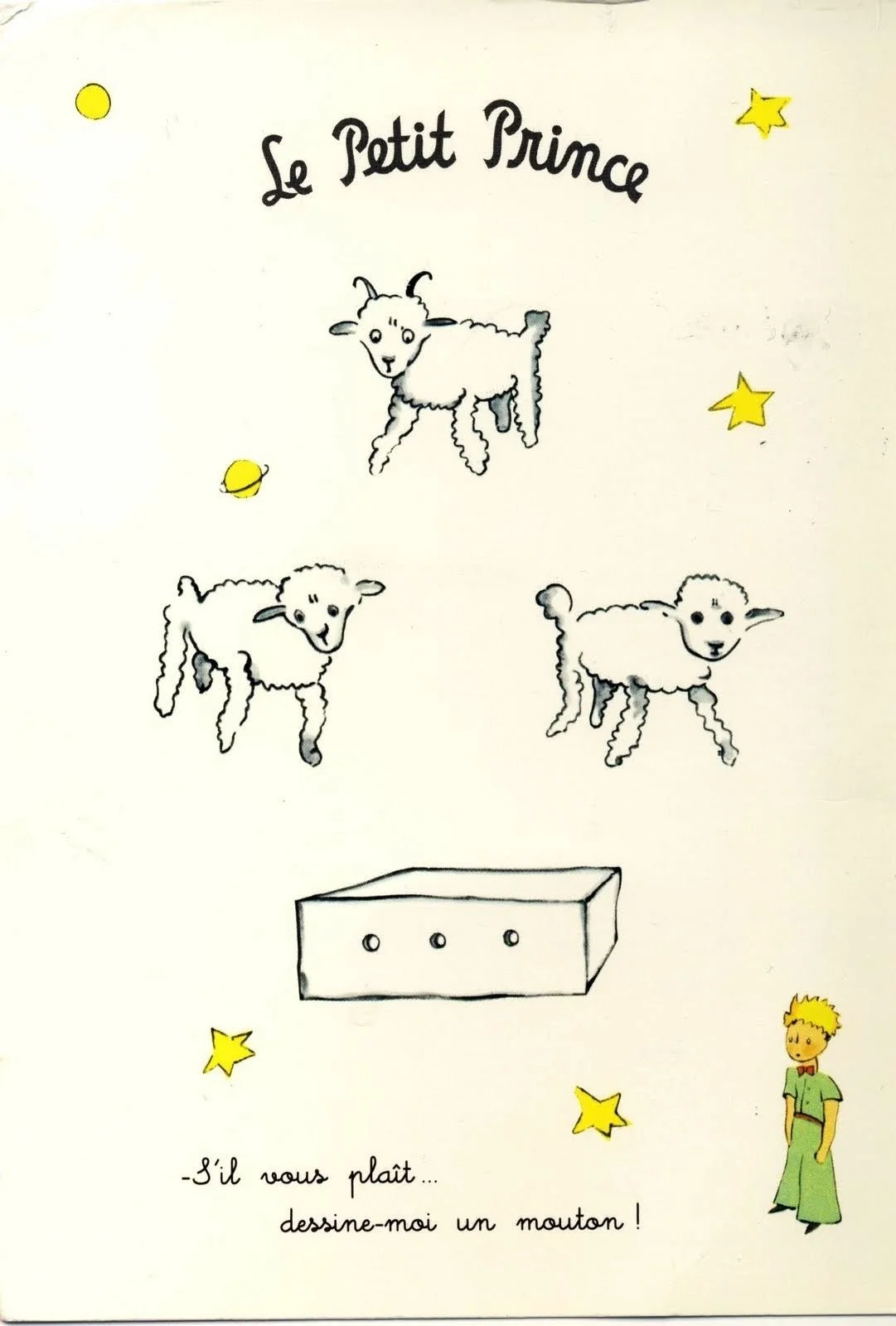
images of the children book The little prince